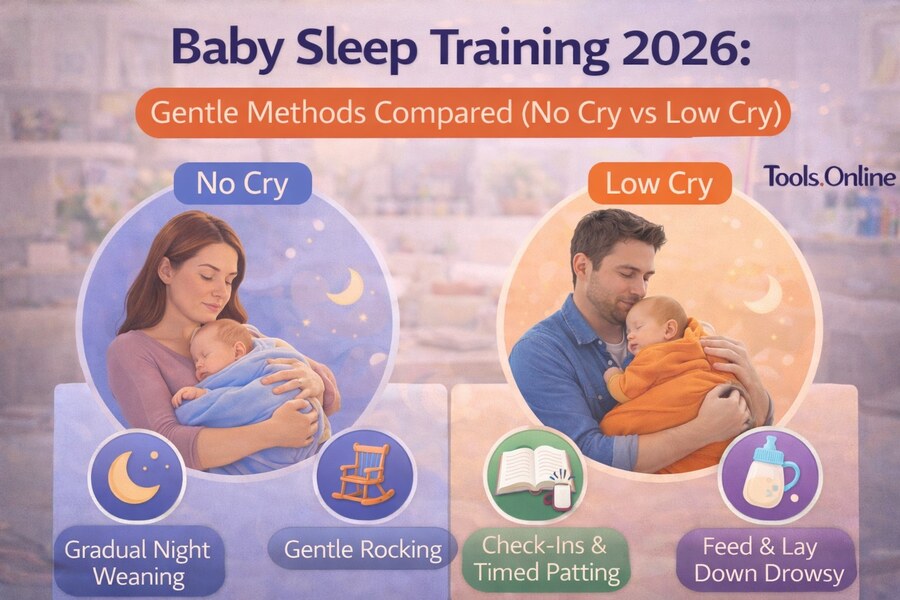
If you’re reading this at 2 a.m. with one eye open, you’re not alone. Baby sleep is one of the most talked-about—and emotionally loaded—topics in parenting. Everyone has an opinion, and in 2026, the advice is louder than ever.
Here’s the good news: sleep training doesn’t have to involve extremes. Gentle methods like no-cry and low-cry approaches exist for families who want better sleep without constant stress.
Let’s talk honestly about how they work and which one actually fits your baby.
Why Baby Sleep Is Such a Big Topic for Parents
Sleep affects everything:
-
Baby’s mood
-
Parental mental health
-
Daily routines
-
Overall family balance
When sleep is off, everything feels harder. That’s why parents start looking for solutions—not perfection, just rest.
What’s Changed About Sleep Training in 2026
Modern sleep guidance focuses more on:
-
Emotional safety
-
Baby temperament
-
Parent-baby attachment
-
Flexibility over rigid rules
Sleep training in 2026 is less about “toughening it out” and more about gradual learning.
For more modern parenting guides, visit
👉 https://familyguidetools.online/
What Is Gentle Sleep Training?
Gentle sleep training helps babies learn to fall asleep with support, not isolation. It emphasizes:
-
Consistent routines
-
Gradual changes
-
Responsive caregiving
The goal isn’t silence—it’s confidence and comfort.
When Is a Baby Ready for Sleep Training?
Most gentle methods work best when:
-
Baby is at least a few months old
-
Feeding patterns are established
-
There are no major health concerns
Readiness matters more than age alone.
Understanding No-Cry Sleep Training Methods
No-cry methods are exactly what they sound like—focused on minimizing or avoiding crying during the process.
What “No Cry” Really Means
“No cry” doesn’t mean zero frustration. It means:
-
You respond quickly
-
Baby is never left alone to cry
-
Comfort is always available
Common No-Cry Techniques
-
Gradual bedtime routine changes
-
Rocking or feeding less over time
-
Staying in the room until baby sleeps
These methods feel slow—but steady.
Pros and Cons of No-Cry Methods
Pros
-
Emotionally reassuring
-
Works well for sensitive babies
-
Less stress for parents
Cons
-
Takes longer
-
Requires patience and consistency
Think marathon, not sprint.
Understanding Low-Cry Sleep Training Methods
Low-cry methods allow brief fussing but not prolonged distress.
What “Low Cry” Actually Looks Like
Low-cry means:
-
Short periods of fussing
-
Parent checks in regularly
-
Comfort is offered often
Baby isn’t ignored—they’re learning.
Popular Low-Cry Techniques
-
Gradual check-ins
-
Sitting farther away each night
-
Short pauses before responding
These methods balance learning with reassurance.
Pros and Cons of Low-Cry Methods
Pros
-
Faster results than no-cry
-
Still emotionally supportive
-
Clear structure
Cons
-
Some crying is involved
-
Can be emotionally challenging for parents
No Cry vs Low Cry: Side-by-Side Comparison
Let’s make it crystal clear.
Speed of Results
-
No Cry: Slow and gradual
-
Low Cry: Moderate and structured
Emotional Comfort
-
No Cry: Maximum reassurance
-
Low Cry: Balanced comfort
Parental Involvement
-
No Cry: High involvement
-
Low Cry: Moderate involvement
Best Fit by Baby Temperament
-
No Cry: Highly sensitive babies
-
Low Cry: Adaptable or curious babies
How to Choose the Right Gentle Method for Your Baby
Ask yourself:
-
How does my baby react to change?
-
How comfortable am I with brief fussing?
-
Can I be consistent for weeks?
The “best” method is the one you can stick with.
Common Sleep Training Mistakes to Avoid
-
Changing methods too quickly
-
Skipping bedtime routines
-
Expecting instant results
-
Comparing your baby to others
Progress looks different for every family.
How Long Gentle Sleep Training Really Takes
Most gentle methods take:
-
2–4 weeks for noticeable improvement
-
Longer for complete consistency
That’s normal. Learning sleep is like learning any new skill.
Final Thoughts on Gentle Sleep Training
Sleep training in 2026 isn’t about forcing independence. It’s about teaching sleep gently, with trust and consistency. Whether you choose no-cry or low-cry, both methods can work beautifully when matched to the right baby and parent.
Conclusion
Gentle sleep training proves that better sleep doesn’t have to come with guilt or tears. By understanding the difference between no-cry and low-cry approaches, parents can make informed, confident choices that support both rest and emotional connection. Calm nights are possible—and they start with the right method.
For more baby sleep and parenting resources, visit
👉 https://familyguidetools.online/
FAQs
1. Is gentle sleep training effective?
Yes, when done consistently and matched to your baby’s temperament.
2. Does no-cry sleep training take longer?
Usually, yes—but it’s often emotionally easier for parents.
3. Is some crying harmful during sleep training?
Brief fussing is normal in low-cry methods and doesn’t mean distress.
4. Can I combine no-cry and low-cry methods?
Many parents do, adjusting based on their baby’s response.
5. When should I stop sleep training?
If your baby shows signs of illness or major regression, pause and reassess.