Let’s be honest—screen time is one of the biggest parenting stressors right now. Phones, tablets, TVs, gaming consoles… they’re everywhere. And in 2026, screens aren’t going away. They’re part of school, social life, and even creativity.
The goal isn’t to eliminate screens. It’s to use them wisely—without daily arguments, guilt, or power struggles.
This guide gives you clear, realistic screen time rules by age and a family plan that doesn’t turn your home into a battleground.
Why Screen Time Rules Matter More Than Ever in 2026
Screens are no longer just entertainment. Kids use them to:
-
Learn
-
Communicate
-
Create
-
Relax
Without boundaries, screens can crowd out sleep, physical activity, and real-world connection. With the right rules, though, screens can actually support healthy development instead of hurting it.
What’s Changed About Screen Time in Recent Years
Screen time in 2026 looks very different from a decade ago:
-
More educational and interactive content
-
Increased school-based screen use
-
Earlier exposure to personal devices
That’s why modern screen rules focus less on strict bans and more on balance and quality.
For more modern parenting guides, visit
👉 https://familyguidetools.online/
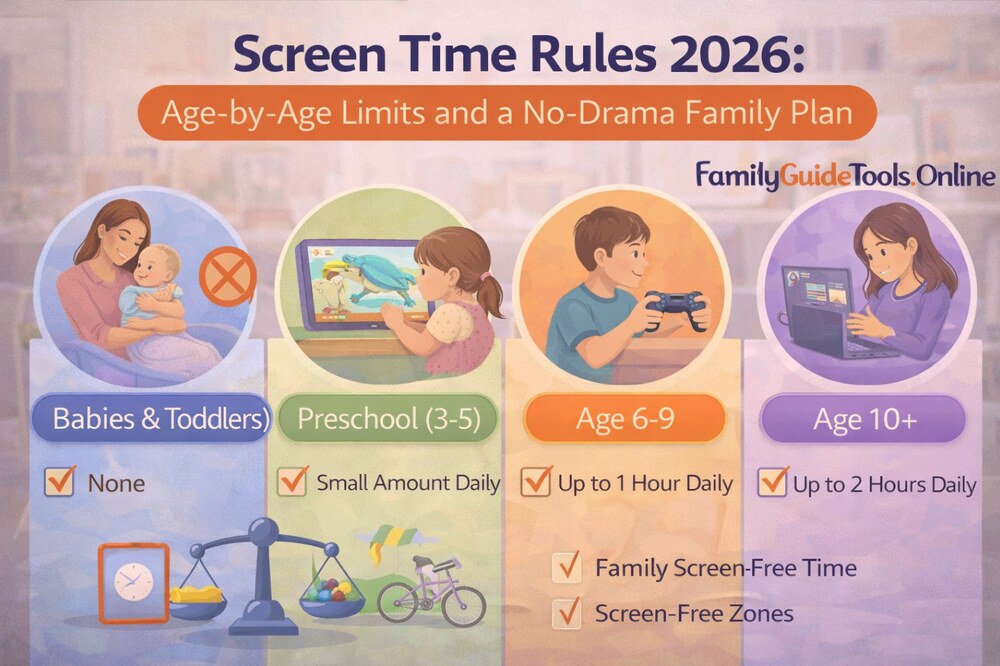
Screen Time by Age: Clear Guidelines for 2026
Let’s break it down by age so you know exactly where your child fits.
Screen Time for Babies (0–18 Months)
What’s Okay and What to Avoid
-
Avoid solo screen use
-
Video calls with family are okay
-
Real-world interaction matters most
Babies learn through movement, faces, and voices—not screens.
Screen Time for Toddlers (18 Months–3 Years)
Educational Content vs Passive Viewing
-
Limit to about 30 minutes a day
-
Watch together when possible
-
Choose slow-paced, age-appropriate content
Think of screens as a shared activity, not a babysitter.
Screen Time for Preschoolers (4–5 Years)
Daily Limits and Smart Boundaries
-
Around 1 hour per day
-
Prioritize educational games and shows
-
Avoid screens before bedtime
At this age, routine matters more than exact minutes.
Screen Time for Kids (6–9 Years)
Balancing School, Play, and Screens
-
1–2 hours of recreational screen time
-
School-related use doesn’t count
-
Screens come after homework and play
This is a great age to introduce screen responsibility.
Screen Time for Tweens (10–12 Years)
Independence With Guardrails
-
2 hours of recreational use
-
Clear rules for gaming and social apps
-
Regular check-ins instead of constant monitoring
Trust builds better habits than control.
Screen Time for Teens (13–18 Years)
Healthy Habits Over Hard Limits
-
Focus on sleep, grades, and mental health
-
Encourage device-free time daily
-
Set boundaries for nighttime use
Teens need guidance—not micromanagement.
Quality vs Quantity: Why Content Matters More
Not all screen time is equal.
-
Creating > Consuming
-
Educational > Passive
-
Social > Isolating
A teen coding, designing, or learning isn’t the same as endless scrolling. Content quality often matters more than the clock.
Signs Your Child May Need a Screen Time Reset
Watch for:
-
Trouble sleeping
-
Increased irritability
-
Loss of interest in offline activities
-
Power struggles over devices
These are signals—not failures.
Creating a No-Drama Family Screen Time Plan
This is where everything comes together.
Step 1: Set Clear, Simple Rules
Write them down. Keep them short. Post them somewhere visible.
Step 2: Create Screen-Free Zones
Common examples:
-
Bedrooms
-
Dinner table
-
Family time
Step 3: Model Healthy Screen Habits
Kids notice everything. If you’re glued to your phone, they will be too.
Step 4: Use Tech to Your Advantage
Parental controls, timers, and device settings help enforce rules without constant reminders.
You can find family-friendly tech tools at
👉 https://familyguidetools.online/
Step 5: Review and Adjust Regularly
What works at age 6 won’t work at age 12. Adjust as your child grows.
Common Screen Time Mistakes Parents Make
-
Being inconsistent
-
Using screens as the only reward
-
Setting rules without explanation
-
Expecting perfection
Progress beats perfection every time.
What to Do When Screen Time Rules Are Broken
Stay calm.
-
Remind them of the rule
-
Apply a fair, consistent consequence
-
Move on
Drama feeds resistance. Calm builds cooperation.
Final Thoughts on Screen Time in 2026
Screen time isn’t the enemy. Chaos is.
With clear expectations, flexible limits, and healthy modeling, screens can exist in your home without constant stress.
Conclusion
In 2026, the best screen time rules are realistic, age-appropriate, and adaptable. By focusing on balance instead of bans and habits instead of hours, families can build a healthier relationship with screens—without daily arguments or guilt.
For more practical parenting tools and guides, explore
👉 https://familyguidetools.online/
FAQs
1. Is educational screen time different from recreational?
Yes. Educational and interactive use is generally more beneficial.
2. Should screen time rules be the same every day?
Consistency helps, but flexibility for weekends and special occasions is okay.
3. Are screens before bed always bad?
For most kids, yes. Screens can interfere with sleep routines.
4. How do I reduce screen time without fights?
Set expectations early and offer engaging offline alternatives.
5. Can screen time be part of a healthy routine?
Absolutely—when balanced with sleep, play, and family time.