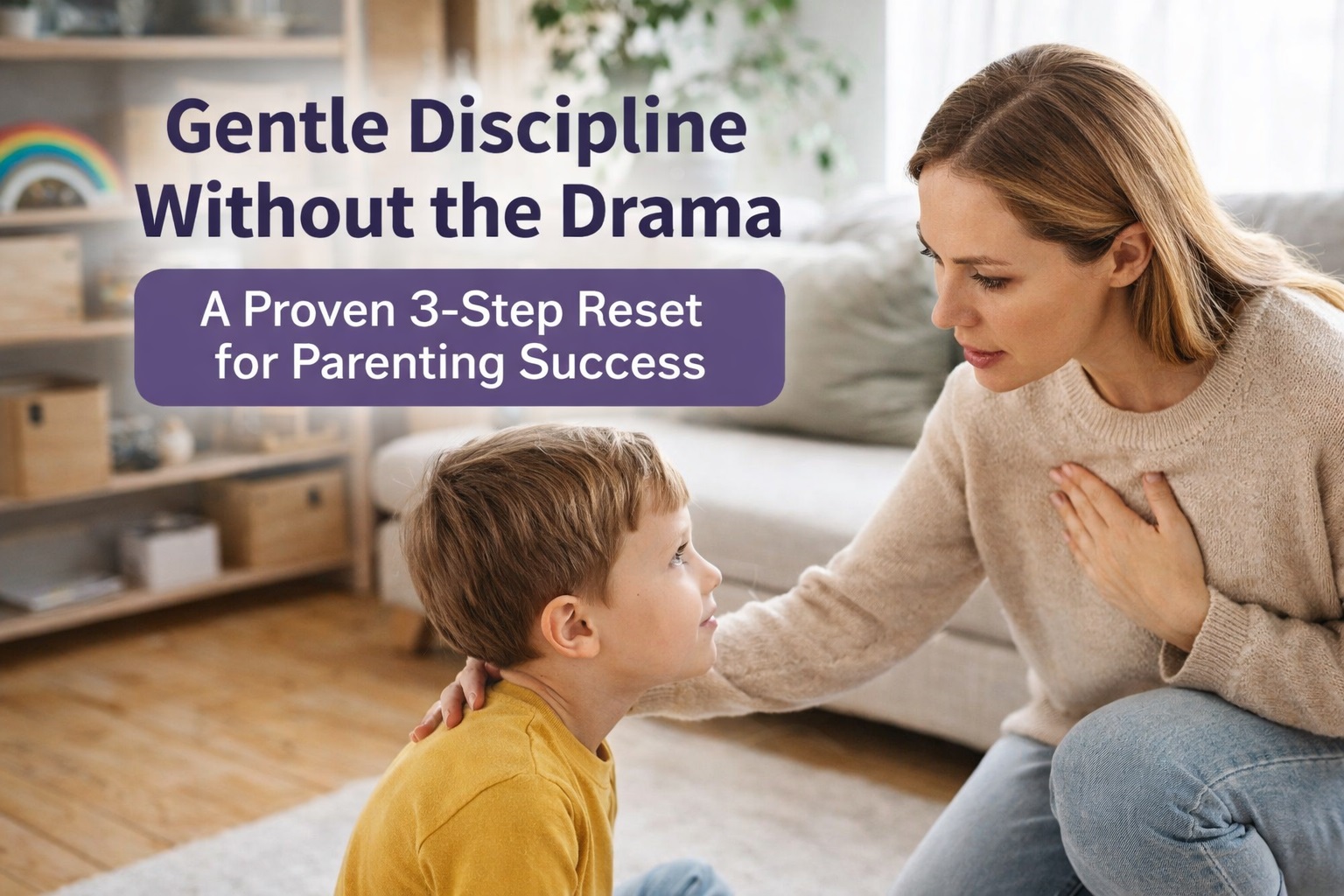
Parenting is one of the most rewarding experiences in life—but it can also be one of the most emotionally demanding. Daily challenges like tantrums, defiance, whining, or sibling conflicts often push parents toward yelling, threats, or punishments they later regret. If you’ve ever wondered whether discipline can work without drama, the answer is yes.
Gentle discipline offers a calm, respectful, and effective way to guide children’s behavior while preserving trust and emotional connection. This article explains a proven 3-step reset that helps parents discipline confidently—without shouting, shaming, or power struggles.
What Is Gentle Discipline?
Gentle discipline is a parenting approach that focuses on teaching, not punishing. It recognizes that children are still developing emotional control, reasoning skills, and impulse management.
Instead of asking:
“How do I stop this behavior right now?”
Gentle discipline asks:
“What does my child need to learn from this situation?”
Key principles include:
-
Emotional connection before correction
-
Clear and consistent boundaries
-
Respectful communication
-
Age-appropriate expectations
Gentle discipline is not permissive parenting. Rules, limits, and consequences still exist—but they’re delivered with calm authority rather than fear.
Why Traditional Discipline Often Leads to Drama
Many parents rely on discipline methods they experienced growing up. While common, these methods often create more conflict than cooperation.
Common Traditional Approaches
-
Yelling or raised voices
-
Threats or bribes
-
Time-outs used as isolation
-
Physical punishment
Why They Don’t Work Long-Term
-
Children comply out of fear, not understanding
-
Emotional connection weakens
-
Behavior often returns when fear is gone
-
Children don’t learn self-regulation
Research in child psychology shows that children learn best when they feel safe, connected, and understood. Gentle discipline aligns with how children’s brains actually develop.
The Science Behind Gentle Discipline
When a child is upset, the emotional part of the brain (the amygdala) is highly active. In this state, the logical thinking brain is less accessible.
This means:
-
Lectures won’t work
-
Reasoning won’t register
-
Punishment escalates stress
Gentle discipline works because it helps children calm down first—then learn. Neuroscience confirms that regulated brains learn better.
The Proven 3-Step Reset for Gentle Discipline
This reset can be used in everyday situations—from toddler tantrums to school-age defiance. Each step builds on the next.
Step 1: Regulate Yourself Before You Discipline
The most overlooked part of discipline is the parent’s emotional state.
Children mirror adult emotions. When you’re calm, your child calms faster. When you’re overwhelmed, chaos escalates.
Recognize Your Triggers
Triggers might include:
-
Disrespectful tone
-
Public embarrassment
-
Repeated rule-breaking
-
Sibling fights
Becoming aware of these triggers allows you to pause instead of react.
Simple Regulation Techniques
-
Take 3 slow breaths before responding
-
Lower your voice intentionally
-
Relax your shoulders and jaw
-
Step away briefly if needed
Saying, “I need a moment to calm down” models emotional responsibility—an essential life skill.
Step 2: Connect Before You Correct
Once you’re calm, focus on connection. Connection doesn’t mean approval—it means understanding.
Why Connection Matters
Children cooperate more when they feel:
-
Seen
-
Heard
-
Safe
Connection reduces defensiveness and opens the door to learning.
Use Empathetic Language
Examples:
-
“You’re upset because playtime ended.”
-
“That felt unfair to you.”
-
“I see how frustrated you are.”
These statements don’t excuse behavior. They validate emotions while keeping boundaries intact.
Avoid Escalating Phrases
Instead of:
-
“Stop crying.”
-
“You’re being bad.”
-
“Because I said so.”
Try:
-
“I’m here to help.”
-
“I won’t let you hurt others.”
-
“Let’s figure this out together.”
Step 3: Guide, Don’t Control
After connection comes guidance. This is where discipline actually teaches.
Set Clear and Kind Boundaries
Boundaries should be:
-
Calmly stated
-
Consistent
-
Enforced without anger
Example:
“I won’t let you throw toys. Toys are for playing safely.”
No yelling. No lectures. Just clarity.
Use Natural and Logical Consequences
Consequences should relate directly to the behavior.
Examples:
-
Toys thrown → toys put away
-
Screen rules broken → screen time reduced
-
Refusal to clean up → less time for the next activity
This teaches cause and effect—not fear.
Gentle Discipline by Age Group
Children’s developmental stages matter. Adjust expectations accordingly.
Toddlers (1–3 Years)
-
Use redirection
-
Keep language simple
-
Expect repetition
Toddlers are learning impulse control. Patience is essential.
Preschoolers (3–5 Years)
-
Offer limited choices
-
Use playfulness
-
Teach emotional vocabulary
Preschoolers respond well to connection and consistency.
School-Age Children (6–10 Years)
-
Involve them in problem-solving
-
Encourage responsibility
-
Discuss consequences calmly
This age group benefits from collaboration and accountability.
Common Gentle Discipline Mistakes to Avoid
Even well-intentioned parents can struggle.
Avoid:
-
Expecting immediate results
-
Over-explaining during meltdowns
-
Being inconsistent with rules
-
Confusing kindness with permissiveness
Gentle discipline is a long-term strategy, not a quick fix.
Benefits of Gentle Discipline
Over time, parents notice:
-
Fewer power struggles
-
Improved emotional regulation in children
-
Stronger parent-child bonds
-
Increased cooperation
-
Greater confidence in parenting decisions
Children raised with gentle discipline often develop:
-
Self-control
-
Empathy
-
Problem-solving skills
-
Emotional intelligence
Frequently Asked Questions (FAQs)
Is gentle discipline effective for strong-willed children?
Yes. Strong-willed children often respond best to respectful, consistent guidance.
Does gentle discipline mean no consequences?
No. Consequences exist—but they’re logical, calm, and connected to behavior.
What if gentle discipline doesn’t work right away?
Consistency matters. Behavioral change takes time.
Can gentle discipline work in public?
Yes. Calm confidence often de-escalates situations faster than threats.
What if I lose my temper?
Repair the relationship. Apologizing teaches accountability and trust.
Is gentle discipline backed by research?
Yes. Child development research strongly supports connection-based discipline.
Final Thoughts: Discipline Without Drama Is Possible
Parenting will never be completely stress-free—but discipline doesn’t have to involve yelling, guilt, or regret. By regulating yourself, connecting with your child, and guiding behavior calmly, you create a home built on trust and learning.
This 3-step reset isn’t about perfection. It’s about progress, presence, and patience.
Gentle discipline doesn’t remove authority—it strengthens it.
And most importantly, it helps raise emotionally healthy children while protecting your relationship with them.