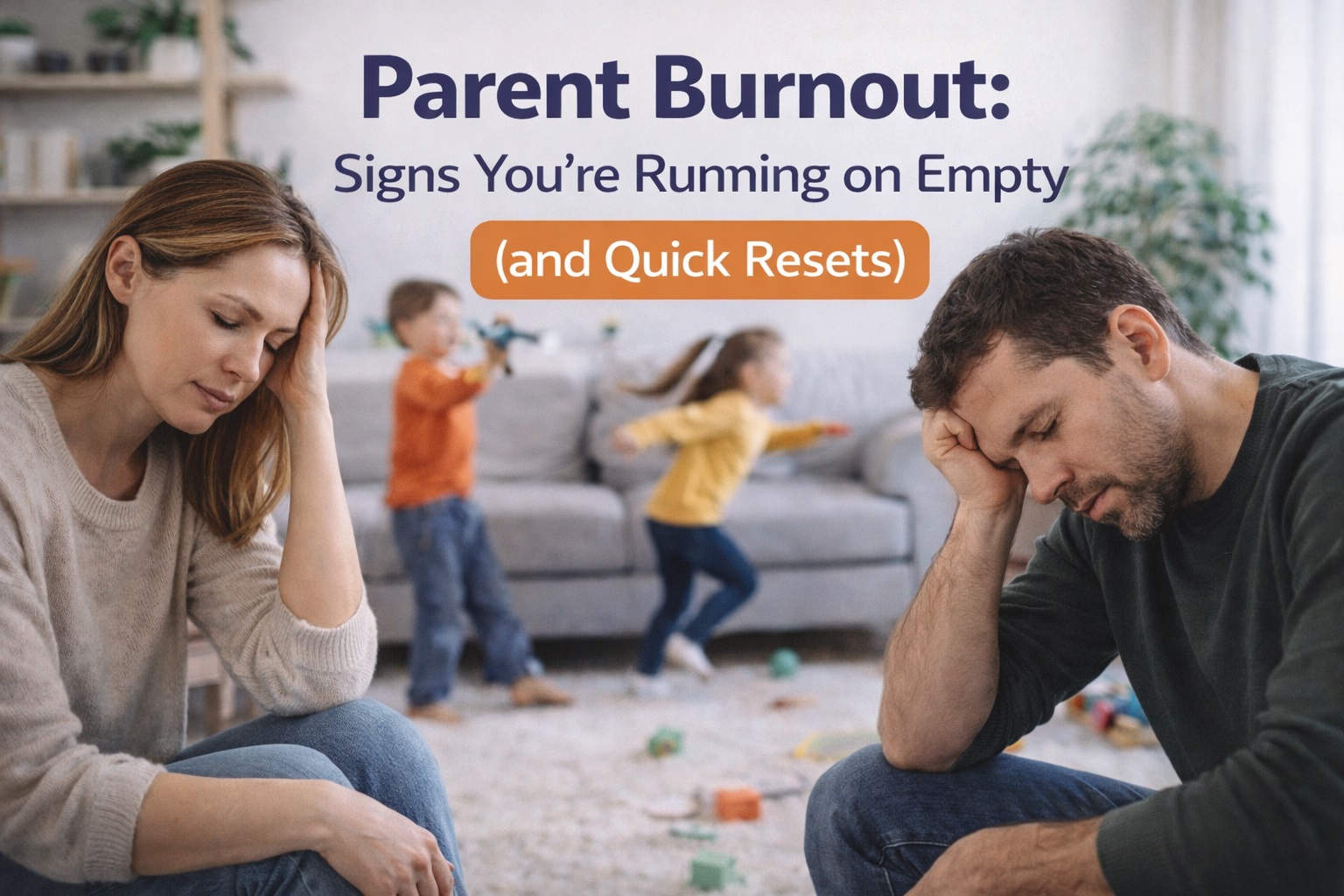
Parenting demands constant emotional, physical, and mental energy. When those demands exceed your capacity for too long, parent burnout can quietly take hold. You may still be showing up for your family—but inside, you feel drained, disconnected, or overwhelmed.
Burnout doesn’t mean you’re a bad parent. It means you’ve been carrying too much for too long without enough support or recovery.
This guide helps you recognize the signs of parent burnout and offers quick, realistic resets to help you regain balance—without guilt or unrealistic self-care expectations.
What Is Parent Burnout?
Parent burnout is a state of chronic exhaustion related specifically to the parenting role. Unlike general stress, burnout doesn’t go away after a good night’s sleep or a weekend break.
It’s characterized by:
-
Emotional exhaustion
-
Feeling detached or numb
-
Reduced sense of effectiveness
-
Increased irritability
Burnout often builds slowly, making it easy to dismiss—until it becomes overwhelming.
Why Parent Burnout Is So Common Today
Modern parenting places intense pressure on caregivers.
Contributing factors include:
-
Constant availability expectations
-
Lack of community support
-
Sleep deprivation
-
Financial stress
-
Information overload
-
Trying to “do it all” perfectly
Parents today are doing more with less support—and it takes a toll.
Signs You’re Running on Empty
Burnout doesn’t always look dramatic. Often, it shows up in subtle ways.
Emotional Signs of Parent Burnout
-
Feeling numb or detached
-
Irritability over small things
-
Frequent guilt or self-criticism
-
Loss of joy in parenting
-
Feeling emotionally flat
You may still love your children deeply—but feel disconnected from yourself.
Physical Signs of Burnout
-
Constant fatigue
-
Headaches or body aches
-
Sleep problems
-
Frequent illness
-
Low energy even after rest
Your body often signals burnout before your mind accepts it.
Mental and Behavioral Signs
-
Brain fog
-
Forgetfulness
-
Difficulty concentrating
-
Feeling overwhelmed by simple tasks
-
Withdrawing from others
You might feel like you’re always “behind” no matter how much you do.
How Parent Burnout Affects Children
Burnout isn’t a personal failure—but it does affect family dynamics.
Children may notice:
-
Increased tension
-
Less patience
-
Emotional distance
-
Inconsistent responses
Addressing burnout benefits not just parents—but children too.
Why “Just Take a Break” Isn’t Enough
Well-meaning advice often misses the point.
Burnout isn’t caused by:
-
One bad day
-
Lack of gratitude
-
Poor time management
It’s caused by ongoing imbalance between demands and recovery. Fixing it requires more than occasional rest.
Quick Resets for Parent Burnout (That Actually Work)
These resets are designed for real parents with limited time and energy.
Reset #1: Lower the Bar (Immediately)
Perfection fuels burnout.
Try This Today:
-
Choose “good enough” over perfect
-
Drop one non-essential task
-
Let something be unfinished
Lowering expectations isn’t giving up—it’s conserving energy.
Reset #2: Create One Non-Negotiable Pause
Burnout thrives without breaks.
Examples:
-
5 minutes of quiet in the car
-
One cup of tea without multitasking
-
A short walk alone
Consistency matters more than length.
Reset #3: Reduce Decision Fatigue
Parenting requires thousands of decisions daily.
Simplify By:
-
Rotating meals
-
Creating fixed routines
-
Limiting choices
Fewer decisions = more mental space.
Reset #4: Name What You’re Feeling
Unacknowledged emotions intensify burnout.
Try saying:
-
“I’m overwhelmed.”
-
“I need support.”
-
“This is hard right now.”
Naming emotions reduces their power.
Reset #5: Ask for Help (Without Explaining)
You don’t need a breakdown to deserve support.
Help can look like:
-
Asking a partner for specific help
-
Delegating one task
-
Saying no to extra commitments
Help is a strategy—not a weakness.
Reset #6: Reconnect With Your Body
Burnout disconnects mind and body.
Quick Body-Based Resets:
-
Deep breathing for 60 seconds
-
Stretching your shoulders and neck
-
Stepping outside for fresh air
Regulating your body helps regulate your emotions.
Reset #7: Repair, Not Retreat
Burnout often brings guilt over parenting reactions.
Repair sounds like:
-
“I’m sorry I snapped earlier.”
-
“I was tired, not angry at you.”
Repair builds connection—and reduces shame.
Preventing Parent Burnout Long-Term
Prevention isn’t about doing more—it’s about doing differently.
Protective Habits:
-
Regular rest (not earned rest)
-
Shared responsibilities
-
Emotional support
-
Realistic expectations
Small changes practiced consistently matter most.
Parent Burnout by Parenting Stage
New Parents
-
Sleep deprivation is a major trigger
-
Accept help early
-
Focus on survival, not optimization
Parents of Young Children
-
High physical and emotional demands
-
Build predictable routines
-
Schedule micro-breaks
Parents of School-Age Kids
-
Mental load increases
-
Delegate responsibilities
-
Protect personal time
Burnout looks different at every stage—but relief is possible.
Frequently Asked Questions (FAQs)
Is parent burnout the same as depression?
No, but they can overlap. Burnout is role-specific and situational.
Can parent burnout affect physical health?
Yes. Chronic stress impacts immune function and sleep.
Does burnout mean I don’t love my kids?
Absolutely not. It means you’re overwhelmed, not uncaring.
How long does recovery take?
Recovery is gradual. Small resets practiced consistently help most.
Should I seek professional help?
Yes, if burnout feels unmanageable or persistent.
Can both parents experience burnout?
Yes. Burnout affects all caregivers, regardless of role.
Final Thoughts: You’re Not Weak—You’re Worn Out
Parent burnout isn’t a sign of failure. It’s a sign that you’ve been giving more than you’ve been able to restore.
You don’t need a complete life overhaul to feel better. You need small, compassionate resets that help you breathe again—physically and emotionally.
Taking care of yourself isn’t selfish.
It’s how you keep showing up.