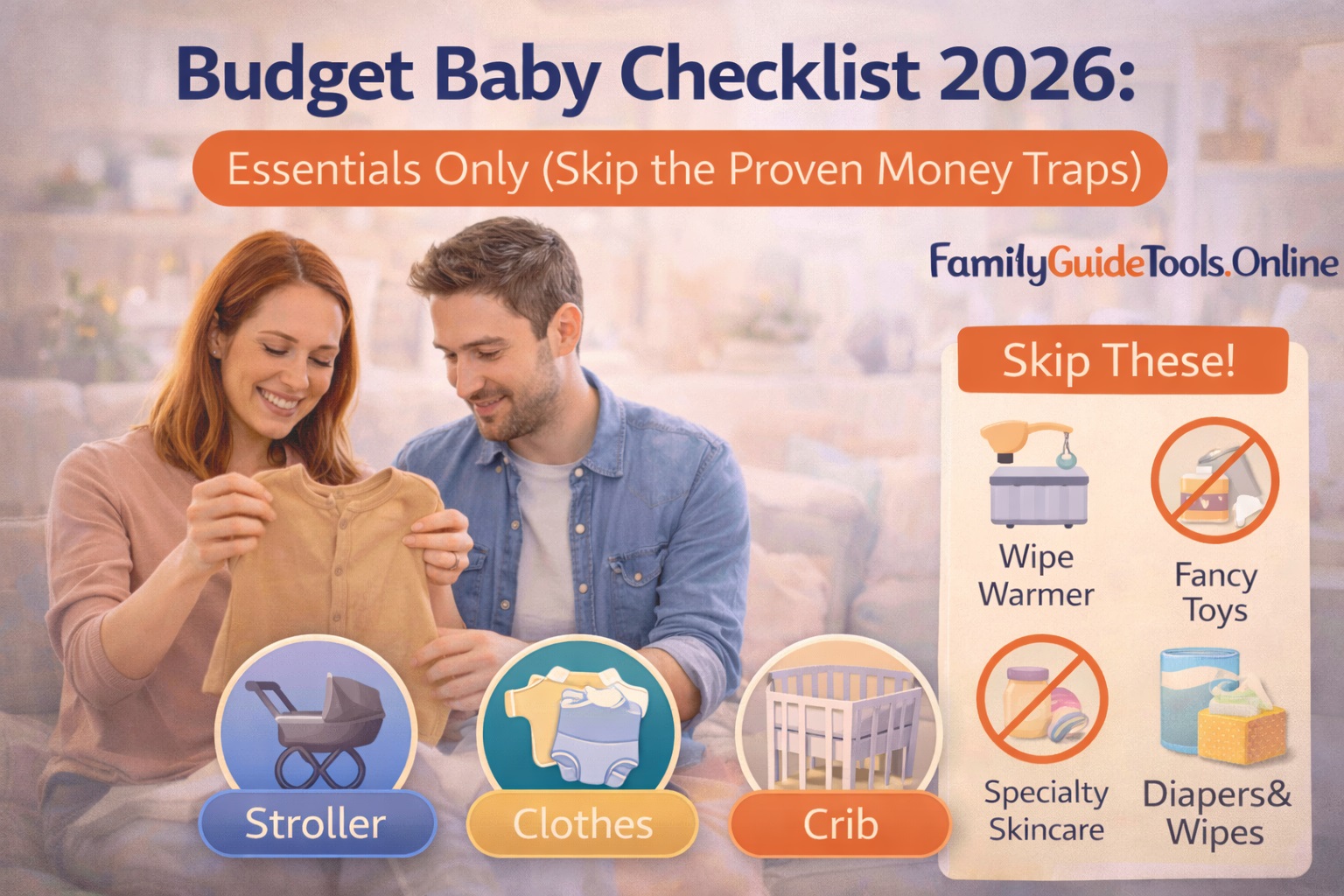
If you’ve ever walked into a baby store (or opened a baby shopping app) and felt like you need a second job just to afford the “must-haves,” you’re not alone. Baby marketing is powerful, and it’s designed to make exhausted parents feel like love = buying more.
Here’s the truth: babies need a safe place to sleep, a safe way to travel, a way to eat, a way to stay clean and warm, and a caregiver who shows up. Everything else is optional—and many “popular” items are expensive money traps that get used for two weeks (or never).
This 2026 budget baby checklist gives you:
-
essentials only for newborn to 3 months
-
a clear skip list of proven money traps
-
what to buy used safely vs what to buy new
-
a simple registry strategy that won’t overwhelm your home
Let’s keep it realistic and kind to your wallet.
Why Baby Shopping Gets So Expensive So Fast
Marketing Targets Tired Parents
Most baby products aren’t sold by proving they’re necessary. They’re sold by triggering emotions:
-
fear (“what if you don’t have this?”)
-
guilt (“good parents buy the best”)
-
convenience promises (“this will solve sleep”)
-
social pressure (“everyone has it”)
In 2026, the marketing is even louder online—short videos, influencer “hauls,” and aesthetic nurseries that look more like showrooms than real life.
The “Just in Case” Trap
“Just in case” items are the fastest budget leak. The smarter plan:
-
buy the true essentials now
-
keep a short “later list”
-
order extras only after baby arrives and you see what you actually use
The Budget Rule: Safety + Feeding + Sleep + Diapers (That’s the Core)
What Counts as an Essential
An essential is something that supports one of these:
-
Safe sleep
-
Safe travel
-
Feeding
-
Diapering
-
Basic health and hygiene
-
Warmth and clothing
That’s it.
What Can Wait Until Baby Arrives
These can often wait:
-
swaddles variety packs
-
baby carriers (unless you know you’ll use one)
-
breastfeeding gadgets you’re unsure about
-
bigger sizes of diapers and clothing
-
bottle types (many babies have preferences)
Waiting saves money and reduces clutter.
Essentials Checklist (Newborn to 3 Months)
This list is intentionally short. It’s enough to start—and you can add later.
Safe Sleep Essentials
Must-have:
-
A firm, flat sleep space: crib, bassinet, or portable play yard
-
A fitted sheet that matches the mattress
-
2–3 extra sheets (because spit-up and leaks happen)
-
Sleep sacks or swaddles (2–4 depending on laundry frequency)
Nice but not required:
-
a simple white noise machine (your phone can work too)
Budget tip: A portable play yard can serve as a sleep space + safe place to set baby down.
Diapering Essentials
Must-have:
-
diapers (newborn size or size 1 depending on baby size)
-
wipes
-
diaper cream (one reliable one, not five brands)
-
changing pad or a towel on the bed/sofa
-
diaper pail is optional—any covered bin works
Budget tip: Start with small packs. Babies outgrow newborn size fast.
Feeding Essentials (Breast, Bottle, Combo)
If breastfeeding
Must-have:
-
nursing bras or comfy tops (2–3)
-
nipple cream (if needed)
-
breast pads (reusable or disposable)
-
a few burp cloths (you can use small towels)
Optional:
-
a pump (depends on your plan; some insurance/benefits cover it in some countries)
-
milk storage bags (only if pumping)
If bottle feeding (formula or expressed milk)
Must-have:
-
6–8 bottles (start with fewer if you’re unsure baby will like them)
-
bottle brush
-
formula (if using)
-
clean water access (follow your clinician guidance for mixing)
Optional:
-
sterilizer machines (not required for many families; boiling/steam methods can work)
-
bottle warmers (a mug of warm water often works)
Budget tip: Don’t buy 20 bottles before baby arrives. Buy 2–3 of one type first, then commit once you know baby accepts them.
Clothing Essentials
Babies don’t need a fashion wardrobe. They need comfort and easy diaper access.
Must-have (starter set):
-
6–10 bodysuits/onesies
-
4–6 sleepers/zip pajamas (zippers are your best friend at 3 a.m.)
-
2–3 hats (climate dependent)
-
socks are optional (many fall off; footed sleepers help)
-
2–3 light layers (cardigan, simple sweater)
Budget tip: Skip fancy outfits. Babies live in sleepers.
Health & Hygiene Essentials
Must-have:
-
infant thermometer
-
baby nail file or baby nail clippers
-
gentle soap/shampoo (one bottle)
-
soft washcloths
-
baby towel (optional; any soft towel works)
-
nasal saline + suction tool (especially useful in cold/flu season)
Optional:
-
full grooming kits with 15 items (you won’t use most of it)
Travel Essentials (Car + Walks)
Must-have (if you have a car):
-
a car seat that fits your baby and your car (this is a true essential)
For walking:
-
stroller OR baby carrier (you don’t need both right away)
-
if you choose a stroller: pick one that fits your lifestyle (lightweight beats fancy for many parents)
Budget tip: If you’ll babywear a lot, a single comfortable carrier can replace a pricey stroller early on.
Comfort & Soothing Essentials
Must-have:
-
burp cloths (or small towels)
-
a few simple pacifiers (if you choose to use them)
-
one baby blanket for supervised cuddle time (not for unsafe sleep setups)
Optional:
-
multiple swings, loungers, and fancy rockers (one is enough if you even need one)
The “Skip It” List: Proven Money Traps
This is where most budgets disappear.
Fancy Newborn Outfits and Shoes
Newborn shoes are adorable—and almost never used. Newborn outfits also get:
-
spit up on
-
leaked on
-
outgrown quickly
Buy one “cute outfit” for photos if you want. Stop there.
Wipe Warmers, Bottle Warmers, and Formula Gadgets
These are classic money traps:
-
wipe warmers dry out wipes and need constant refills
-
bottle warmers take counter space and time
-
formula mixing machines can be expensive and add cleaning work
Budget alternative:
-
room-temp wipes (babies adjust)
-
warm bottle in a mug of warm water
-
mix formula carefully by hand (as instructed)
Baby Food Makers (Too Early + Too Much Work)
You won’t need baby food tools for months. Also, a basic blender or fork can do the job later.
Special Laundry Detergent Overkill
Many families do fine with a gentle, fragrance-free detergent. You don’t need a “baby-only laundry system” unless your baby has skin sensitivity and your pediatrician recommends changes.
Too Many Swings/Bouncers/Seats
Babies usually like one motion thing, not five. Also, preferences vary. Buy after baby arrives if needed.
What to Buy Used (Safely) vs What to Buy New
Buying used is one of the best budget moves—when done safely.
Safe to Buy Used
Usually safe if in good condition and cleaned:
-
clothing
-
swaddles/sleep sacks (check zippers and fabric)
-
strollers (check brakes and wheels)
-
baby carriers (verify buckles and stitching)
-
changing tables/furniture
-
bouncers (check recalls and straps)
Buy New (Safety + Hygiene)
Better bought new:
-
car seat (unless you fully trust the history: no crashes, not expired, correct model info)
-
crib mattress
-
bottle nipples/pacifiers
-
breast pump parts that contact milk (unless replaced with new parts)
-
anything recalled or missing parts/manual
Budget tip: If you buy a used crib, ensure it meets current safety standards in your region and has all hardware.
The Minimalist Baby Registry Strategy (2026 Edition)
If you’re making a registry, do it in two lists.
Ask for “Consumables” and Gift Cards
Consumables are the best gifts because you will use them:
-
diapers and wipes
-
diaper cream
-
burp cloths
-
baby soap
-
gift cards for pharmacy/baby store
-
meal delivery cards (amazing postpartum support)
Build a Second List for Later
Create a “later list” for items you may need at 3–6 months:
-
larger sleep sacks
-
bigger diaper sizes
-
baby gates (later)
-
high chair (later)
-
feeding tools for solids (later)
This prevents overbuying before you know what your baby prefers.
Budget Alternatives That Work Just as Well
Sleep
Expensive bassinet not required. A safe sleep space that meets standards is what matters.
Budget wins:
-
portable play yard
-
basic bassinet
-
second-hand crib + new mattress
Feeding
The best setup is the one you can maintain.
Budget wins:
-
a few reliable bottles, not a whole set
-
simple drying rack
-
nursing pillow is optional (regular pillows can help with positioning)
Diapers
You don’t need a subscription or premium brand if your baby tolerates standard options.
Budget wins:
-
store-brand diapers
-
buy in bulk after you know sizing
-
keep a few sizes on hand, not a mountain
Toys and Development
Newborns don’t need toys. They need:
-
your voice
-
high-contrast images
-
tummy time
-
safe floor time
Budget wins:
-
a simple play mat or blanket
-
a couple of high-contrast cards
-
a soft rattle
Sample Budget Tiers (Low, Mid, Comfortable)
These are examples to help you visualize. You can mix and match.
Bare Minimum Starter Kit
-
safe sleep space + sheets
-
diapers/wipes + cream
-
feeding basics (breast pads or a few bottles)
-
10–15 simple clothing items
-
thermometer + nail care + nasal saline
-
car seat (if needed)
Balanced Budget Kit
Everything above +:
-
one baby carrier or a basic stroller
-
a white noise option
-
a simple baby monitor (optional based on home size)
-
extra sleep sacks
-
a basic bath support (optional)
Comfort Add-Ons That Aren’t a Waste
These can be genuinely helpful if your budget allows:
-
a supportive baby carrier that fits your body well
-
extra sets of sheets and sleepers (less laundry stress)
-
postpartum support items (for mom!)
-
a quality stroller if you walk daily
Notice the theme: comfort add-ons that reduce stress are better than trendy gadgets.
Storage and Home Setup Tips for Small Spaces
You don’t need a nursery to be ready.
Simple setup:
-
one basket near the couch (diapers, wipes, burp cloth, cream)
-
one basket near bed (pads, water, snacks, charging cable)
-
one drawer for baby clothes (keep it tiny)
-
one bin for “outgrown” items
Small systems beat big furniture.
FAQs About Budget Baby Essentials 2026
1) What’s the biggest money trap for new parents?
Buying too much before the baby arrives—especially gadgets and multiple “solutions” for sleep/feeding.
2) How many newborn clothes do I really need?
Enough to get through 2–3 days without laundry if possible. Many babies live in sleepers. Start small.
3) Is it safe to buy baby gear used?
Often yes, especially clothing and strollers. Be cautious with car seats and mattresses, and always check for recalls.
4) Do I need a stroller AND a baby carrier?
Not necessarily. Many families start with one and add the other later.
5) What should I spend more on?
Spend more on:
-
safety items (car seat, safe sleep setup)
-
items you’ll use daily (stroller or carrier, if chosen)
-
comfort support for mom postpartum (often ignored but valuable)
Final Takeaway: Your Baby Needs You, Not Stuff
In 2026, the most loving choice isn’t buying everything. It’s buying what truly matters, staying financially stable, and keeping your home calm and functional.
Start with the essentials:
safe sleep, safe travel, feeding, diapers, basic health, and simple clothing.
Skip the money traps. Buy used where it’s safe. Add only when you’re sure you need it.
Your baby will not remember the brand of swing.
They will remember the feeling of being safe in your arms.
Helpful references:
American Academy of Pediatrics (HealthyChildren.org) – Baby gear & safety guidance:
https://www.healthychildren.org/
CDC – Safe sleep basics:
https://www.cdc.gov/sids/
NHTSA – Car seats and booster seats:
https://www.nhtsa.gov/equipment/car-seats-and-booster-seats
CPSC – Recalls (check used baby items):
https://www.cpsc.gov/Recalls