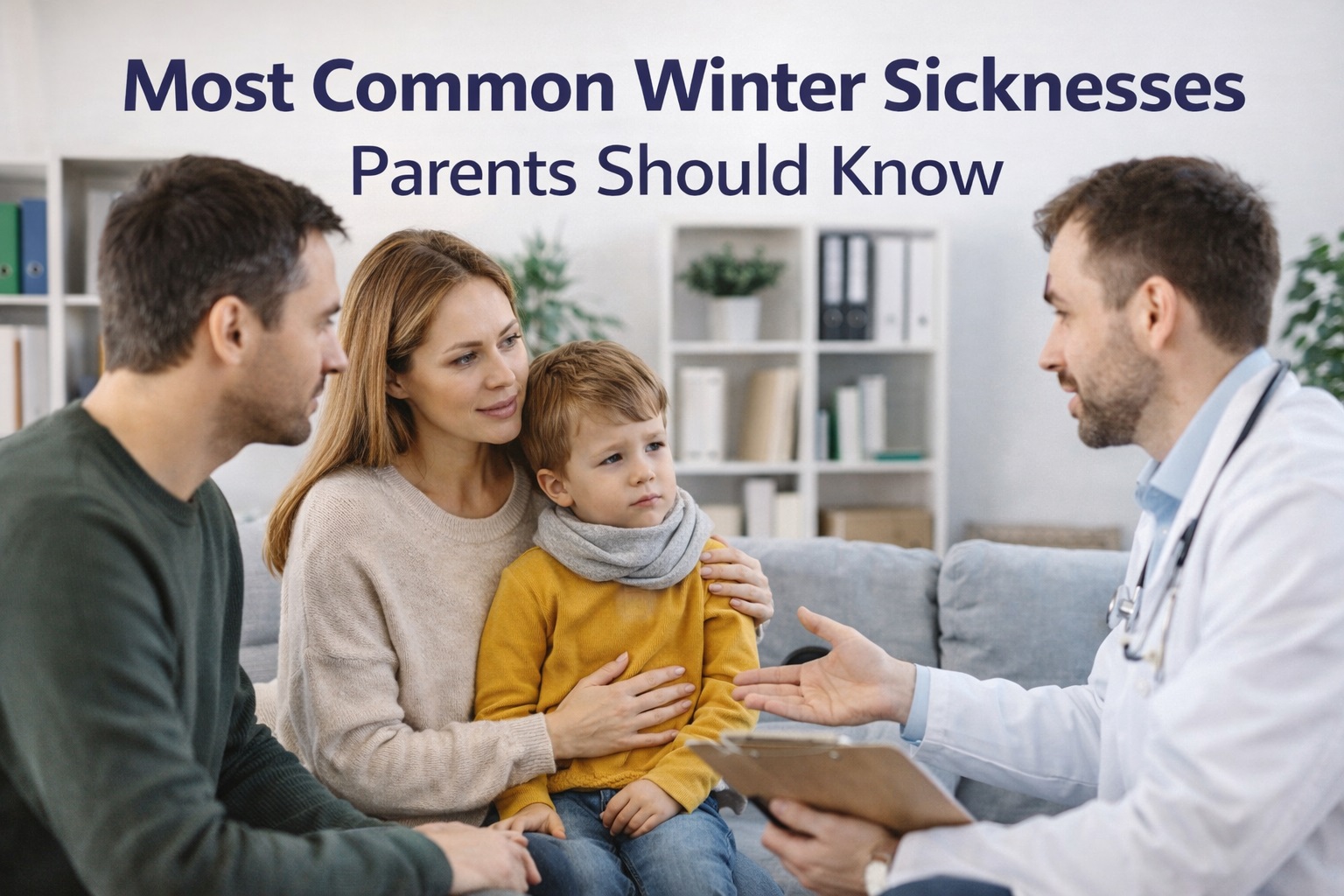
Winter brings cozy nights, holidays, and family time—but it also brings a surge of viruses that spread quickly among children. From runny noses to high fevers, winter illnesses can leave parents feeling anxious and unsure about what’s normal and what needs medical attention.
This winter viruses parent checklist is designed to help you stay calm, informed, and prepared. You’ll learn which symptoms to watch, what to do at home, when to call the doctor, and how to protect your family throughout the season.
Why Winter Viruses Are More Common in Children
Children are especially vulnerable during winter months for several reasons:
-
Immune systems are still developing
-
Close contact at schools and daycare
-
More time spent indoors
-
Increased exposure to shared surfaces
Viruses thrive in cold, dry air and spread easily through coughing, sneezing, and touch.
Most Common Winter Viruses Parents Should Know
Understanding what’s going around helps reduce panic when symptoms appear.
Common Winter Illnesses in Children
-
Common cold
-
Influenza (flu)
-
RSV (Respiratory Syncytial Virus)
-
COVID-19
-
Stomach viruses (norovirus, rotavirus)
-
Croup
Many of these viruses share similar symptoms, which is why observation is so important.
Winter Viruses Parent Checklist: Symptoms to Watch
Not every sniffle is serious, but some symptoms deserve closer attention.
Mild Symptoms (Usually Safe to Monitor at Home)
-
Runny or stuffy nose
-
Mild cough
-
Low-grade fever
-
Sneezing
-
Slight fatigue
-
Reduced appetite
These often improve within a few days with rest and fluids.
Moderate Symptoms (Monitor Closely)
-
Fever lasting more than 3 days
-
Persistent cough
-
Vomiting or diarrhea
-
Ear pain
-
Thick nasal discharge
-
Lethargy
If symptoms worsen or don’t improve, contact your pediatrician.
Red Flag Symptoms (Seek Medical Care Immediately)
-
Difficulty breathing or rapid breathing
-
Blue lips or fingernails
-
High fever (above 39°C / 102°F)
-
Severe dehydration
-
Chest retractions (skin pulling in while breathing)
-
Confusion or extreme drowsiness
Trust your instincts—if something feels wrong, seek care.
What to Do First When Your Child Gets Sick
A calm response makes a big difference.
Step 1: Keep Your Child Comfortable
-
Encourage rest
-
Offer fluids frequently
-
Use age-appropriate fever relief if recommended
-
Dress them comfortably (not overdressed)
Comfort is often the most effective early treatment.
Step 2: Track Symptoms
Keep note of:
-
Fever readings
-
Eating and drinking habits
-
Energy levels
-
Breathing patterns
This information helps doctors make better decisions if needed.
Step 3: Isolate When Necessary
If your child is contagious:
-
Keep them home from school
-
Avoid close contact with infants or elderly family members
-
Clean shared surfaces regularly
This protects others and supports recovery.
Home Care Tips That Actually Help
Parents often wonder what truly works during winter illnesses.
Helpful Home Care Practices
-
Humidifier for congestion
-
Saline drops for nasal relief
-
Warm fluids for throat comfort
-
Honey (for children over 1 year) for cough
-
Light, nutritious meals
Avoid overmedicating—less is often more.
When to Call the Doctor
Call your pediatrician if:
-
Fever persists beyond 72 hours
-
Symptoms worsen suddenly
-
Your child isn’t drinking fluids
-
Breathing seems labored
-
You’re unsure or concerned
Pediatricians expect these calls during winter—don’t hesitate.
How to Prevent Winter Viruses in Children
Prevention won’t eliminate illness, but it reduces frequency and severity.
Daily Prevention Checklist
-
Handwashing with soap
-
Teach kids to cover coughs
-
Disinfect high-touch surfaces
-
Keep sick children home
-
Encourage adequate sleep
Consistency matters more than perfection.
Nutrition and Immunity
Support immune health with:
-
Fruits and vegetables
-
Protein-rich foods
-
Adequate hydration
-
Vitamin D (if recommended by a doctor)
A well-nourished body fights viruses more effectively.
Vaccines and Winter Protection
Vaccinations play a critical role in prevention.
Important winter vaccines include:
-
Seasonal flu vaccine
-
COVID-19 vaccines (if eligible)
Vaccines reduce severity—even if illness occurs.
Winter Viruses by Age Group
Infants (0–12 Months)
-
Monitor breathing closely
-
Watch feeding patterns
-
Seek care earlier if unsure
Toddlers (1–3 Years)
-
Expect frequent colds
-
Focus on hydration
-
Watch for ear infections
School-Age Children (4–10 Years)
-
Teach hygiene habits
-
Encourage rest despite “feeling fine”
-
Monitor fever trends
Common Parent Mistakes During Winter Illness
Avoid these pitfalls:
-
Sending kids back to school too early
-
Overusing antibiotics
-
Ignoring dehydration
-
Comparing symptoms to other children
Every child responds differently.
Frequently Asked Questions (FAQs)
How long do winter viruses usually last?
Most viral illnesses last 5–10 days, though coughs can linger longer.
Can my child go outside when sick?
Yes, if fever-free and comfortable. Fresh air can help.
Do antibiotics help winter viruses?
No. Antibiotics only treat bacterial infections.
How can I tell if it’s flu or a cold?
Flu often comes on suddenly with high fever and body aches.
Is RSV dangerous for all children?
RSV is usually mild but can be serious for infants and high-risk children.
Should siblings be kept home if one child is sick?
Only if they show symptoms or were directly exposed.
Final Thoughts: Prepared Parents Worry Less
Winter viruses are part of childhood—but panic doesn’t have to be. With the right knowledge, clear checklists, and calm observation, parents can manage illness confidently and safely.
This winter viruses parent checklist helps you know what to watch, what to do, and when to act—so you can focus less on fear and more on care.
Prepared parents don’t eliminate illness.
They handle it with confidence.