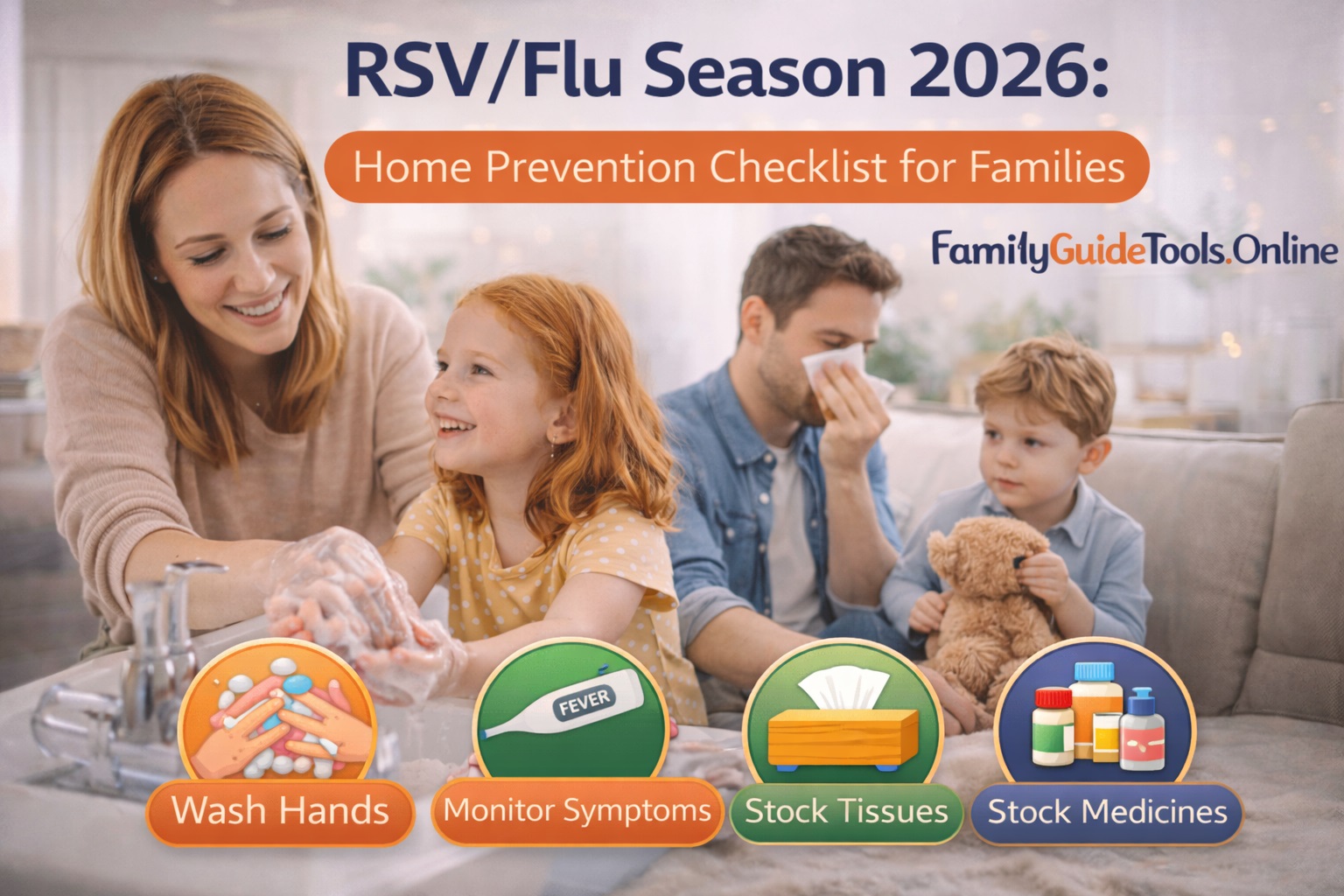
When RSV and flu season hits, it can feel like your home turns into a “virus relay race.” One kid sneezes, then the baby gets congested, then a parent is knocked out for days, and finally it circles back to the first child again. This is especially common in families with toddlers, daycare kids, or school-age siblings who bring germs home every week.
The good news: you can’t eliminate every virus, but you can reduce how often illness enters your home and how fast it spreads once it’s inside. The key is a layered prevention plan that is realistic, repeatable, and gentle enough that you’ll actually do it.
This 2026 guide gives you a print-and-use home prevention checklist plus practical routines for air, hands, cleaning, visitors, daycare habits, and what to do in the first 48 hours when symptoms begin.
Friendly note: This article is for general education, not medical diagnosis. Always follow your pediatrician’s guidance, especially for newborns and high-risk family members.
Why RSV and Flu Spread So Fast at Home
What Makes Families High-Risk for “Ping-Pong” Illness
Homes are perfect for germs because families share:
-
close contact (cuddles, carrying, bedtime routines)
-
shared air (especially with closed windows in cooler months)
-
shared surfaces (remote controls, toys, door handles)
-
shared food and cups (even if you try to stop it)
Kids also touch their faces often and don’t always wash hands well. Therefore, viruses that spread through droplets, aerosols, and hands can move quickly.
RSV vs Flu: What Parents Should Know
RSV commonly causes cold-like symptoms but can be more serious in infants and some high-risk groups.
Flu can cause fever, body aches, fatigue, and sometimes serious complications.
Both can spread before symptoms are obvious, so prevention is most effective when it’s routine—not only when someone looks sick.
The 2026 Prevention Priorities (What Actually Works)
Layers Beat One Perfect Trick
There’s no single “magic” product that prevents RSV or flu. Instead, use layers:
-
cleaner air
-
better hand hygiene
-
smart habits around faces, food, and visitors
-
early isolation when symptoms start
The “Three Buckets”: Air, Hands, and Habits
If you only focus on one thing, focus on air plus hands:
-
Air: ventilation and filtration reduce exposure
-
Hands: reduce transfer from surfaces to face
-
Habits: reduce risky moments (sharing cups, sick visitors)
Home Prevention Checklist (Print-and-Use)
Copy this section into your notes app or print it for the fridge.
Daily Basics
✅ Open windows 10–15 minutes (if weather allows) or improve airflow another way
✅ Run a portable air purifier in main living area (if you have one)
✅ Wash hands:
-
when arriving home
-
before eating
-
after bathroom
-
after wiping noses
✅ Teach “cover coughs” (elbow, not hands)
✅ Avoid sharing cups, utensils, straws, and water bottles
✅ Wipe high-touch items once daily (quick wipe is enough)
Weekly Deep Prevention
✅ Wash bedding (especially pillowcases)
✅ Clean and refresh commonly used toys
✅ Replace or clean HVAC filters as recommended
✅ Clean car seat buckles/cupholders and stroller handles (germ magnets)
Visitors and Gatherings Rules
✅ “No symptoms” rule (cough, fever, sore throat, new runny nose)
✅ Ask visitors to wash hands on arrival
✅ Keep newborns out of “pass-the-baby” circles
✅ Prefer outdoor visits or well-ventilated rooms when possible
✅ Consider masking around newborns or high-risk family members if illness is circulating
Daycare/School Drop-Off and Pickup Habits
✅ Hand sanitize/handwash right after pickup
✅ Shoes off at the door (optional, but helps in many homes)
✅ Change clothes if illness is surging
✅ Lunchbox and water bottle hygiene daily
✅ Teach kids: “hands away from face” (a gentle reminder, not a punishment)
Baby-Specific Protection (Newborn–12 months)
✅ Limit close contact with sick people
✅ Keep baby away from crowded indoor spaces during peaks
✅ Wash hands before feeding, diapering, and holding baby
✅ Don’t let visitors kiss baby’s face/hands
✅ Keep nasal saline + suction ready (for comfort)
✅ Ask your pediatrician about RSV and flu prevention options
Toddler-Specific Protection (1–4 years)
✅ Practice handwashing as a game
✅ Teach “tissue + trash + wash” routine
✅ Keep a “sneeze kit” near play areas
✅ Rotate toys during outbreaks (less to clean at once)
✅ Provide enough sleep (sleep loss increases illness risk)
High-Risk Family Members
✅ Extra attention to air quality and visitor rules
✅ Keep rescue inhalers/meds up to date (if applicable)
✅ Ask your clinician for a prevention plan before peak season
Air Quality: Your Hidden Superpower
Air is one of the most underrated tools in home prevention. Many respiratory viruses spread through the air—especially in crowded, poorly ventilated indoor spaces.
Ventilation (Free)
Ventilation means bringing in fresh air and moving stale air out. Options include:
-
opening windows briefly each day
-
using window fans to pull air out/in
-
turning on bathroom/kitchen exhaust fans during gatherings
-
cracking windows during car rides when possible
Even small changes can help.
Filtration (HVAC and Portable)
If you have central air, your HVAC filter matters. Also, portable air purifiers can improve the air in bedrooms and shared spaces.
Practical approach:
-
Use a purifier where the family spends the most time (living room)
-
Use one in the baby’s room at night if you have it
-
Keep doors partially open when safe to improve airflow
Humidity (Not Too Dry, Not Too Wet)
Dry air can irritate nasal passages, while overly humid air can increase mold risk. Many families aim for a comfortable mid-range humidity, but homes vary by climate. If you use a humidifier:
-
clean it regularly to prevent mold/bacteria buildup
-
avoid letting surfaces stay damp
Cleaning and Disinfecting Without Going Overboard
You don’t need to bleach your entire home daily. That’s exhausting and often unnecessary. Instead, focus on hot spots and consistent routines.
High-Touch “Hot Spots” List
These are worth wiping more often:
-
door handles
-
light switches
-
fridge handle
-
faucet handles
-
remote controls
-
phones/tablets
-
stroller and car seat touch points
-
toys that go in mouths
What to Clean vs What to Disinfect
-
Cleaning removes dirt and germs using soap/detergent.
-
Disinfecting uses chemicals to kill germs on surfaces.
For most homes:
-
clean regularly
-
disinfect when someone is actively sick or during high outbreak weeks
Always follow product label instructions for safe use, especially around children.
Toy, Bottle, and Pacifier Hygiene
-
Mouth toys: clean often; rotate them so you’re not cleaning everything daily
-
Pacifiers: rinse after drops; wash properly at home; replace worn ones
-
Bottles and feeding items: wash thoroughly and allow to dry completely
Hand Hygiene That Kids Will Actually Do
Handwashing fails when it feels like a lecture. Make it easy, fun, and consistent.
The 20-Second Trick That Works
Try:
-
singing a short song
-
using a fun timer
-
“bubble hands” game: rub until bubbles cover all fingers
-
sticker chart for “wash after school” routine (short-term motivation is fine)
Teach the key moments:
-
after toilet
-
before eating
-
after outdoor play
-
after nose wiping
-
after returning home
Hand Sanitizer: When It Helps, When It Doesn’t
Sanitizer can help when soap and water aren’t available. Still:
-
it works best on hands that aren’t visibly dirty
-
soap and water is better after bathroom and messy play
-
supervise toddlers so they don’t lick hands immediately
When Symptoms Start: Your 48-Hour Family Game Plan
If you wait until everyone is sick, prevention becomes impossible. The first 48 hours matter.
Sick Room Setup
If possible:
-
keep the sick child in one main area
-
use one blanket for that space
-
limit face-to-face close contact for siblings (hard, but even partial helps)
Separate Towels, Cups, and a “Sick Bin”
Set up a small basket with:
-
tissues
-
trash bag
-
hand sanitizer
-
thermometer
-
children’s fever meds (if appropriate and approved by your clinician)
-
wipes for high-touch items
Also:
-
separate cups and utensils
-
separate towels
-
wash hands after nose wiping
Sleep and Hydration Rules
When kids get sick:
-
prioritize sleep
-
offer fluids frequently (small sips often)
-
keep meals simple (soups, yogurt, bananas, toast)
Hydration is one of the biggest factors in how kids handle illness.
When to Call the Doctor (Red Flags)
This section is important—especially for babies.
Babies Under 3 Months
If a newborn has fever or seems unwell, contact a clinician urgently. Babies can worsen quickly.
Breathing Trouble Signs
Seek medical care if you notice:
-
rapid breathing
-
ribs pulling in with breaths
-
grunting
-
flaring nostrils
-
lips/face looking bluish or grayish
-
unusual sleepiness or difficulty waking
-
child can’t drink because breathing is too hard
Dehydration Signs
Watch for:
-
fewer wet diapers/urination
-
very dry mouth
-
no tears when crying
-
dizziness or extreme lethargy
If you’re unsure, it’s better to ask early.
Vaccines and Prevention Tools to Ask About in 2026
Prevention at home is powerful, and medical prevention can add another layer.
Flu Shot Timing
Flu vaccination recommendations and timing vary by region and by age. Ask your pediatrician about:
-
best time to get it for your family
-
how many doses a child needs (some children need two doses in their first season)
RSV Prevention Options (Ask Your Pediatrician)
In recent years, new RSV prevention options have expanded in some places (especially for infants and certain high-risk groups). Availability depends on your country and local guidance. Therefore:
-
ask your pediatrician what is recommended for your child
-
ask early, before peak season
FAQs About RSV/Flu Season 2026
1) What’s the single best home change for prevention?
Improving air quality (ventilation/filtration) plus consistent handwashing after school/daycare.
2) Should I disinfect everything daily?
Usually no. Focus on high-touch surfaces and add extra disinfecting only when someone is sick or during peak outbreak weeks.
3) Does keeping kids home stop the spread?
It helps, especially if a child has fever, severe symptoms, or can’t participate normally. Follow your school/daycare rules and your clinician’s guidance.
4) How do I protect a newborn with older siblings?
Use layers: strict handwashing after school, no face kisses, better air, and limit sick visitors. Also ask your pediatrician about prevention options.
5) What if my child gets sick repeatedly?
That can be normal with daycare/school exposure, but talk to your pediatrician if you’re worried—especially with breathing issues, poor weight gain, or frequent complications.
Final Takeaway: A Calm, Layered Plan Beats Panic
RSV and flu season can feel intense, but you don’t need a perfect home to reduce illness spread. You need a repeatable routine:
-
better air
-
better hand habits
-
smarter visitor rules
-
quick action in the first 48 hours
Pick 5–7 checklist items you can do consistently. Add more later if you want. Small changes, repeated daily, are what protect families most.
Helpful references:
CDC – RSV (symptoms, prevention, high-risk groups):
https://www.cdc.gov/rsv/
CDC – Seasonal Flu (prevention, symptoms, vaccination):
https://www.cdc.gov/flu/
American Academy of Pediatrics (HealthyChildren.org) – Colds, Flu, and RSV guidance:
https://www.healthychildren.org/
WHO – Influenza (Seasonal) overview:
https://www.who.int/news-room/fact-sheets/detail/influenza-(seasonal)
NIH/MedlinePlus – RSV information:
https://medlineplus.gov/respiratorysyncytialvirusinfections.html