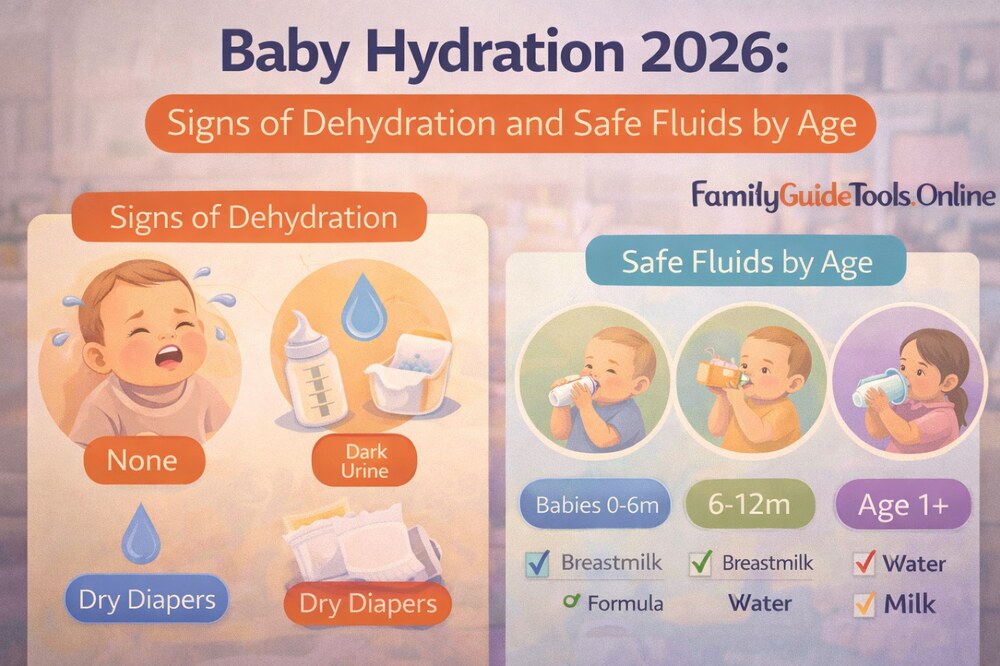
Baby hydration sounds simple, right? Feed them, change them, repeat. But once weather changes, routines shift, or illness pops up, many parents start wondering: Is my baby drinking enough?
In 2026, with hotter summers, busier schedules, and more information (and misinformation) online, understanding baby hydration is more important than ever. The good news? Keeping your baby hydrated doesn’t have to be complicated.
Let’s break it down clearly, calmly, and without medical jargon.
Why Baby Hydration Is So Important
Babies’ bodies are mostly made of water. That means even small fluid losses can affect them faster than adults.
Proper hydration helps:
-
Regulate body temperature
-
Support digestion
-
Prevent constipation
-
Maintain energy and comfort
Unlike adults, babies can’t tell you they’re thirsty. That’s why parents need to spot the signs early.
What’s New About Baby Hydration in 2026
Modern guidance focuses on:
-
Age-appropriate fluids only
-
Avoiding unnecessary supplements
-
Recognizing early dehydration signs sooner
There’s also a stronger emphasis on not giving water too early, which can be risky for young infants.
For more updated baby-care guides, explore
👉 https://familyguidetools.online/
How Babies Stay Hydrated Naturally
In the first months of life, babies get all the hydration they need from:
-
Breast milk
-
Infant formula
These provide the perfect balance of fluids and nutrients. Extra water isn’t needed—and can actually be harmful—during early infancy.
Common Causes of Dehydration in Babies
Dehydration can happen due to:
-
Hot weather
-
Fever or illness
-
Vomiting or diarrhea
-
Reduced feeding
Even mild dehydration can sneak up quickly in babies.
Signs of Dehydration in Babies
Knowing what to look for is key.
Early Signs Parents Often Miss
Behavioral Changes
-
Fussiness or irritability
-
Unusual sleepiness
-
Less interest in feeding
Physical Symptoms
-
Fewer wet diapers
-
Dark yellow urine
-
Dry lips or mouth
These signs are subtle—but important.
Moderate to Severe Dehydration Warning Signs
When to Seek Medical Help
-
No wet diapers for several hours
-
Sunken soft spot on the head
-
Rapid breathing
-
Cool or blotchy skin
If you notice these, contact a healthcare provider right away.
Safe Fluids for Babies by Age
What your baby drinks matters just as much as how much.
Newborns (0–6 Months)
Breast Milk and Formula Only
-
No water
-
No juice
-
No herbal teas
Breast milk or formula provides all hydration and nutrition needed at this stage.
Babies (6–12 Months)
Introducing Small Amounts of Water
-
Small sips of water can be introduced
-
Water should complement, not replace, milk feeds
-
Use an open cup or sippy cup
Milk remains the primary hydration source.
Toddlers (12–24 Months)
Water, Milk, and What to Avoid
-
Water becomes the main fluid
-
Whole milk in appropriate amounts
-
Avoid sugary drinks
Hydration habits formed here often last for years.
Fluids to Avoid at Any Age
Why Juice and Sugary Drinks Are a Bad Idea
-
Can displace nutritious fluids
-
Increase tooth decay risk
-
Add unnecessary sugar
Water and milk are all most children need.
Hydration During Illness, Heat, and Travel
During illness or hot weather:
-
Offer fluids more frequently
-
Use small, regular sips
-
Monitor diaper output closely
Travel can also disrupt routines, so plan hydration breaks just like feeding breaks.
How to Tell If Your Baby Is Getting Enough Fluids
A well-hydrated baby usually:
-
Has regular wet diapers
-
Appears alert and comfortable
-
Feeds consistently
Trust patterns more than exact numbers.
Common Baby Hydration Myths
-
“Babies need water in hot weather” → Not under 6 months
-
“Juice helps hydration” → Not necessary
-
“Crying always means thirst” → Not always
Simple facts beat viral advice every time.
Practical Tips to Keep Your Baby Hydrated
-
Feed on demand
-
Dress appropriately for the weather
-
Track wet diapers during illness
-
Stick to age-appropriate fluids
For more practical baby care tools, visit
👉 https://familyguidetools.online/
Conclusion
Baby hydration in 2026 doesn’t require fancy drinks or complicated rules. It requires awareness, age-appropriate choices, and knowing when something feels off. With the right knowledge, you can confidently keep your baby hydrated, comfortable, and healthy—no guesswork required.
FAQs
1. Can babies drink water every day?
Only after 6 months, and in small amounts alongside milk feeds.
2. How many wet diapers mean my baby is hydrated?
Regular wet diapers throughout the day usually indicate good hydration.
3. Is formula-fed baby hydration different?
No. Formula provides sufficient hydration just like breast milk.
4. Should I give extra fluids during hot weather?
Offer feeds more often, but don’t give water to babies under 6 months.
5. When should I worry about dehydration?
If wet diapers decrease or your baby seems unusually lethargic, seek medical advice.